
A lot of coaching works.
That is important to say up front.
Clients often leave coaching conversations with more clarity, stronger decisions, better focus, improved accountability, and sharper action. They make progress. They move. They perform better. In many cases, they get real results.
So this is not an argument against coaching.
It is an argument for going one layer deeper.
Because while many coaching engagements improve results, far fewer improve sustainability.
That gap matters more than it first appears.
A client can be winning on paper and weakening underneath. They can be more productive, more disciplined, and more successful while also becoming more depleted, less stable, and less able to sustain what they are building. The PrescribeLife onboarding deck frames this tension clearly: many high-performing leaders succeed despite unhealthy patterns, and over time those patterns can create reduced cognitive clarity, burnout risk, unstable leadership performance, declining energy, and inconsistent recovery.
That is the difference between improving performance and improving sustainable performance.
Why results are easier to coach than sustainability
Results are visible.
That makes them easier to coach around.
You can point to:
- clearer goals
- better habits
- more decisive action
- stronger execution
- business progress
- improved accountability
All of those are concrete. They create momentum. They create confidence. They help both the coach and the client feel that something is working.
Sustainability is harder because it lives underneath visible output.
It asks different questions:
- Can this person keep performing at this level without hidden cost?
- Is their recovery improving or weakening?
- Is their emotional regulation staying steady under pressure?
- Are they becoming more stable or just more productive?
- Is this progress repeatable, or expensive?
Those questions are less obvious, but often more important over time.
Why the gap exists
Most coaching is naturally pulled toward what the client brings into the room.
And what the client usually brings is:
- a goal
- a challenge
- a decision
- a growth target
- a team issue
- a performance issue
- a business result they want to improve
That makes sense.
If a founder wants sharper execution, the conversation goes there.
If an executive wants better leadership presence, the conversation goes there.
If a client wants more consistency, the conversation goes there.
So coaching often becomes oriented around performance improvement.
Again, that is not wrong.
It is just incomplete when there is no equal attention on the system that supports performance.
The PrescribeLife deck makes this distinction directly: most leadership coaching improves business results, but fewer systems build measurable performance capacity.
That line captures the issue well.
Results improve.
Capacity is left underdeveloped.
The cost rises quietly.
The problem with “better” when better is expensive
A client can become better at performance while becoming worse at sustaining it.
They may become:
- more responsive, but less regulated
- more productive, but less recovered
- more disciplined, but more brittle
- more successful, but more mentally overloaded
- more externally effective, but less internally stable
This is what makes the sustainability issue easy to miss.
Because “better” can disguise cost.
In the short term, that cost may not look dramatic. It may show up as subtle friction:
- slower recovery after intense weeks
- more emotional reactivity
- poorer transitions between work and rest
- reduced clarity under pressure
- increased dependence on urgency
- personal habits slipping while work performance stays strong
If nobody is looking for those patterns, coaching can unintentionally reinforce them.
The client keeps getting better at delivering.
No one checks whether the delivery system is becoming more fragile.
Why sustainability is not the same as stress management
It is tempting to hear this and reduce it to one idea:
“Clients just need to manage stress better.”
But sustainability is bigger than stress management.
It includes:
- cognitive capacity
- emotional regulation
- physical energy stability
- recovery quality
- habit consistency
- the ability to maintain performance without constant overextension
The PrescribeLife deck ties sustainable high performance to resilience capacity across cognitive capacity, emotional regulation, and physical energy stability.
That matters because sustainability is not just about helping clients feel calmer.
It is about helping them perform from a stronger system.
A client who feels less stressed but still has weak routines, low recovery, and unstable follow-through is not necessarily more sustainable.
Likewise, a client who remains ambitious and stretched but becomes more stable, more self-aware, and better at recovery may actually be moving toward greater sustainability even if their life remains demanding.
Where traditional coaching conversations often stop too early
Many coaching conversations stop at insight.
The client realizes:
- they are overcommitted
- they are reacting instead of leading
- they need better boundaries
- they need to follow through more consistently
- they need to adjust how they operate under pressure
Those are valuable realizations.
But insight alone does not create sustainability.
Sustainability requires structure.
It requires a way to translate awareness into something repeatable.
The PrescribeLife coaching workflow reflects this more structured path: create clarity, define success, design small experiments, review patterns, and adjust.
That sequence matters because sustainability is rarely built through one breakthrough conversation.
It is built through loops.
Small changes.
Measured patterns.
Refinement over time.
Visible proof that the system is becoming stronger.
Why short-term coaching wins can hide long-term weakness
This is one of the most important points.
Many coaching wins are real, but they are still short-term wins.
A client may leave coaching with:
- a stronger mindset
- a more disciplined schedule
- a better plan
- greater confidence
- renewed momentum
All of that can improve performance quickly.
But unless the work also improves recovery, regulation, energy stability, and behavior consistency under real-life pressure, those wins may not hold.
The hidden question is not:
“Did the coaching help?”
The hidden question is:
“Did the coaching make performance more sustainable, or just more effective in the moment?”
That is a much higher bar.
And it is a valuable bar.
What sustainability looks like in practice
Sustainability is not just the absence of burnout.
It is the presence of stronger stability.
It may look like:
- a leader making clearer decisions under pressure
- a client recovering faster after demanding periods
- habits staying more consistent during stressful weeks
- less emotional volatility when stakes rise
- more predictable energy
- better follow-through without relying on constant force
- performance that feels stronger without feeling heavier
That is a different kind of coaching outcome.
It is less flashy at first.
But it is far more durable.
And over time, it often becomes more valuable than short bursts of visible progress.
Why coaches need a better promise
This is also a positioning issue.
A lot of coaching promises improvement.
Improved performance.
Improved leadership.
Improved confidence.
Improved results.
That language is common because it is true, but it is not always differentiated.
A stronger promise is this:
“I help clients improve results in a way they can actually sustain.”
That speaks to a deeper problem.
Especially for high-performing clients.
Because many of them do not need more motivation. They need a better operating system. They need a way to keep performing without paying for it through burnout risk, weaker recovery, unstable energy, or growing internal friction.
That is why sustainability is such a powerful coaching angle. It addresses what many successful people feel but do not always articulate.
Why measurable sustainability changes the game
One reason sustainability often gets neglected is because it feels harder to measure than output.
Results are easy to count.
Sustainability feels softer.
But it does not have to stay vague.
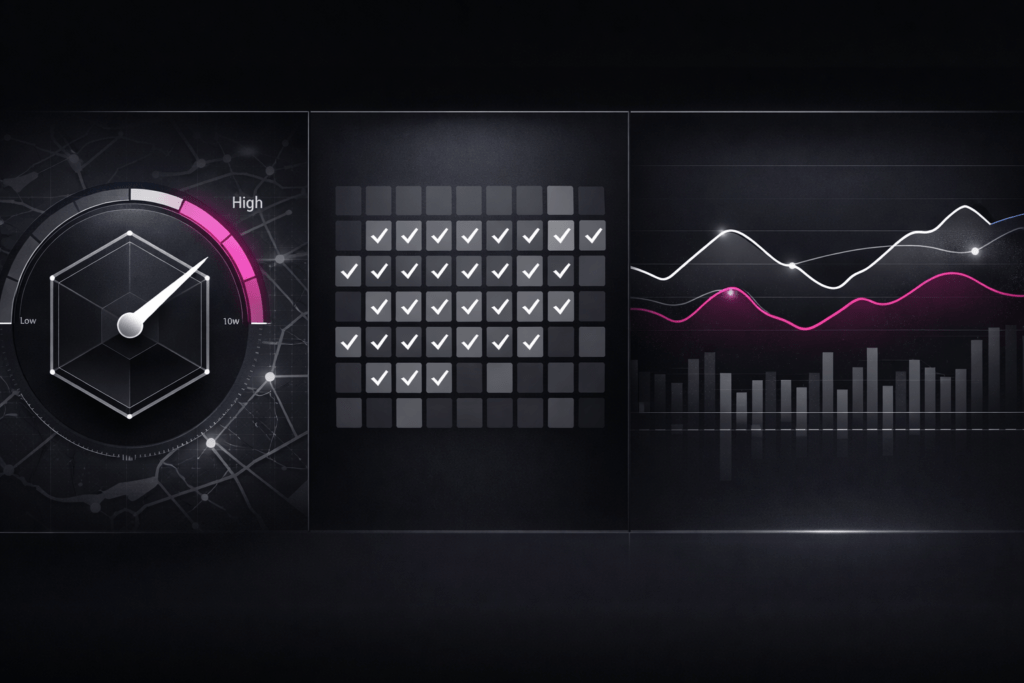
The PrescribeLife deck points to three measurable areas of progress:
- resilience capacity increases
- habit consistency improves
- biometric signals improve
This is important because it gives sustainability more credibility.
It means the coach is not only saying:
“You seem more stable.”
They can also say:
- your follow-through is becoming more consistent
- your resilience indicators are improving
- your recovery-related signals are moving in the right direction
- your performance stability is becoming more visible over time
That changes the conversation.
It turns sustainability from a vague aspiration into a strategic coaching outcome.
What better coaching does differently
Better coaching still improves results.
But it does not stop there.
It also asks:
- What is the client building?
- What needs protection?
- Where is recovery breaking down?
- What patterns show that success is becoming too costly?
- How do we make progress more durable?
This is where structured coaching systems become more valuable than insight alone.
The onboarding deck describes PrescribeLife as a platform and coaching system designed to help coaches deliver measurable performance outcomes and scale their revenue.
That matters because sustainability is not just a nice idea. It is a better delivery model.
When coaches can help clients strengthen the capacity beneath performance, they create outcomes that hold up better in real life.
The real opportunity
The real opportunity is not to replace result-focused coaching.
It is to complete it.
Results matter.
Execution matters.
Progress matters.
But if those improvements are not supported by stronger capacity, they can become fragile.
A client may look better while feeling worse.
A leader may become more effective while becoming less stable.
A business may grow while the person behind it becomes harder pressed to sustain the pace.
That is why sustainability is not a bonus layer.
It is the layer that determines whether progress lasts.
Final thought
Most coaching improves results because results are the easiest thing to aim at.
But the best coaching also improves sustainability.
It strengthens the system beneath performance.
It reduces hidden cost.
It helps clients build results they can actually live inside.
And in the long run, that is what makes coaching more valuable.
Not just because the client performs better.
But because they can keep performing with more clarity, more resilience, and more stability over time.